2026-11-12 · Robert Ellis
How Spring Rains Lead to Crawl Space Flooding in Greensboro Homes
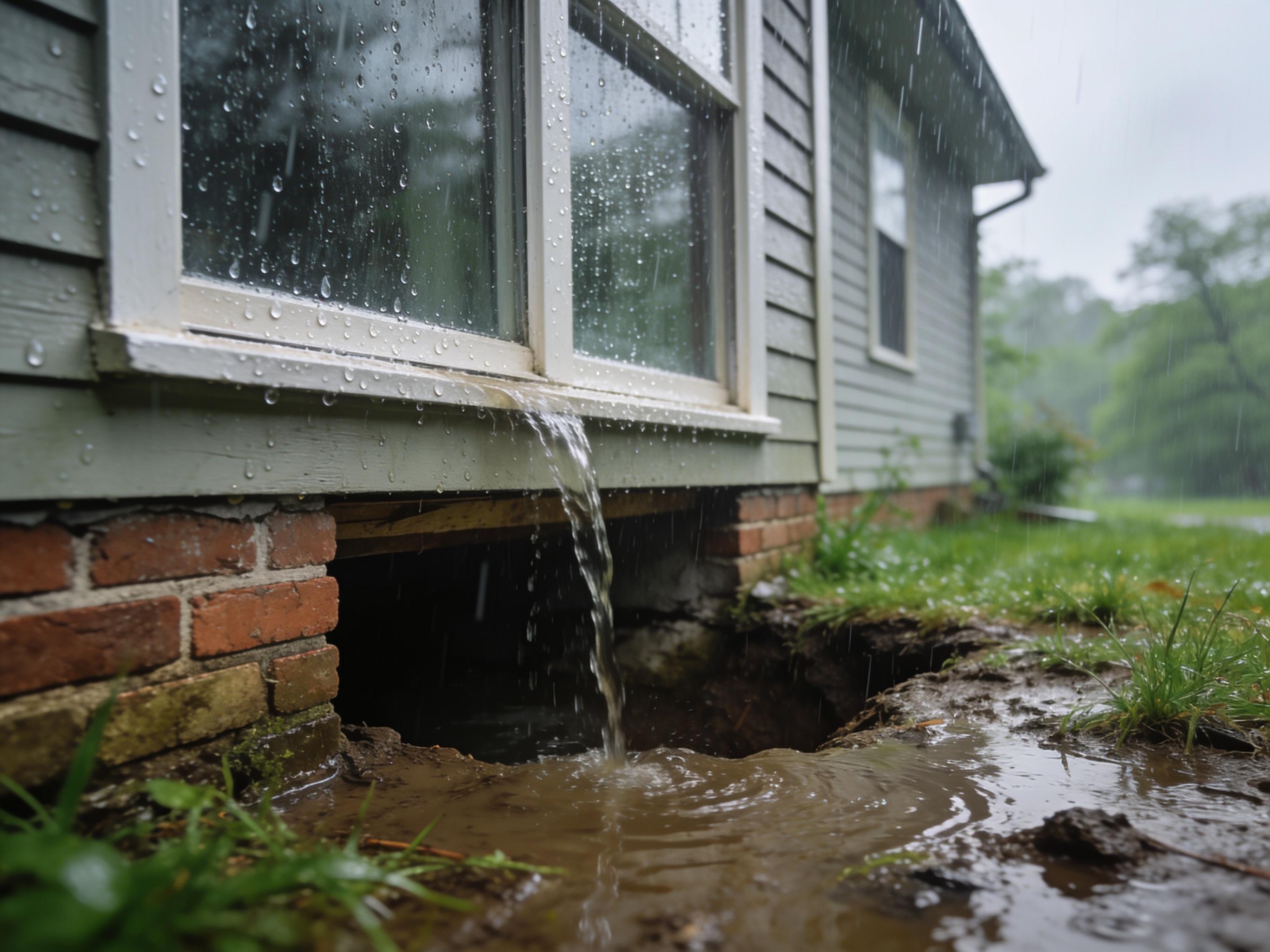
Spring rains lead to crawl space flooding in Greensboro homes when 1-3 inches fall within 24-48 hours on saturated ground, particularly in older properties built before 1970 that sit on shallow crawl spaces with minimal grading. This happens because Guilford County's clay soils hold water instead of draining it away, allowing moisture to push through foundation vents and low spots around the perimeter.
Greensboro Spring Rainfall Patterns
The humid subtropical climate brings frequent spring showers that accumulate quickly between March and May, often totaling 4-6 inches in a single month across areas like Lindley Park and Sunset Hills. These rains fall on ground that has already begun to warm, reducing absorption rates compared to winter months. In neighborhoods near the Greensboro Coliseum, older homes with crawl spaces dug only 18-24 inches deep see water pool faster because downspouts empty directly onto the foundation line. Terrain slopes gently toward the east in much of central Guilford County, channeling runoff from streets into yards where it sits against sill plates. This pattern repeats most years when thunderstorms stall over the region for several hours rather than passing through quickly.
How Local Soil and Home Construction Trap Water
Guilford County soils consist largely of red clay that expands when wet and seals off natural drainage paths around home foundations. Homes in Fisher Park and Westerwood commonly feature brick piers supporting floor joists with dirt floors that slope inward, creating low collection points. Vents placed at ground level allow rainwater driven by wind to enter directly, while missing or deteriorated vapor barriers let moisture rise into the subfloor. Mild winters followed by sudden warm fronts mean the ground rarely freezes deep enough to create protective barriers, so spring water moves laterally under the structure within hours. These conditions differ from newer subdivisions farther out where raised slabs replace traditional crawl spaces.
Water Movement Through Foundations During Heavy Rains
Once rain exceeds the soil's holding capacity, water follows the path of least resistance along the exterior wall and under the footing. In Sunset Hills homes, this often enters through cracks that form from seasonal settling on the clay base. The process accelerates when gutters overflow and direct sheets of water against the siding, saturating the backfill material. Within a day, standing water appears in the crawl space at depths of 1-4 inches near the lowest corner. This standing water then wicks upward into floor joists and insulation, creating the conditions that require water damage restoration if left unaddressed. Similar patterns appear in nearby Winston-Salem where comparable soil and home ages produce parallel results after the same storm systems.
Recognizing Early Indicators in Your Crawl Space
Homeowners notice musty odors rising through floor registers first, followed by soft spots in carpet or buckling hardwood in rooms above the crawl space. Visual checks after storms reveal water lines on pier blocks or debris washed in through vents. In Downtown Greensboro properties with shared lot lines, neighboring grading changes can redirect flow directly into an adjacent crawl space. Checking the area 48 hours after rain ends shows whether the water has receded or remains trapped. These signs appear consistently in homes where original grading has settled over decades without correction.
Practical Steps to Reduce Spring Flooding Risk
Regrading soil to slope away from the foundation at 6 inches over 10 feet prevents the initial pooling that leads to entry. Extending downspouts 5-10 feet from the house and adding French drains along the lowest side diverts water before it reaches the crawl space. Installing a 6-mil vapor barrier sealed at the walls and adding dehumidification keeps moisture levels manageable even after repeated rains. For homes in Lindley Park where the water table sits higher, sump pumps with battery backup provide the next layer of protection when heavy spring events exceed normal drainage capacity. These adjustments address the specific combination of clay soils and older construction found throughout central Greensboro rather than generic solutions.