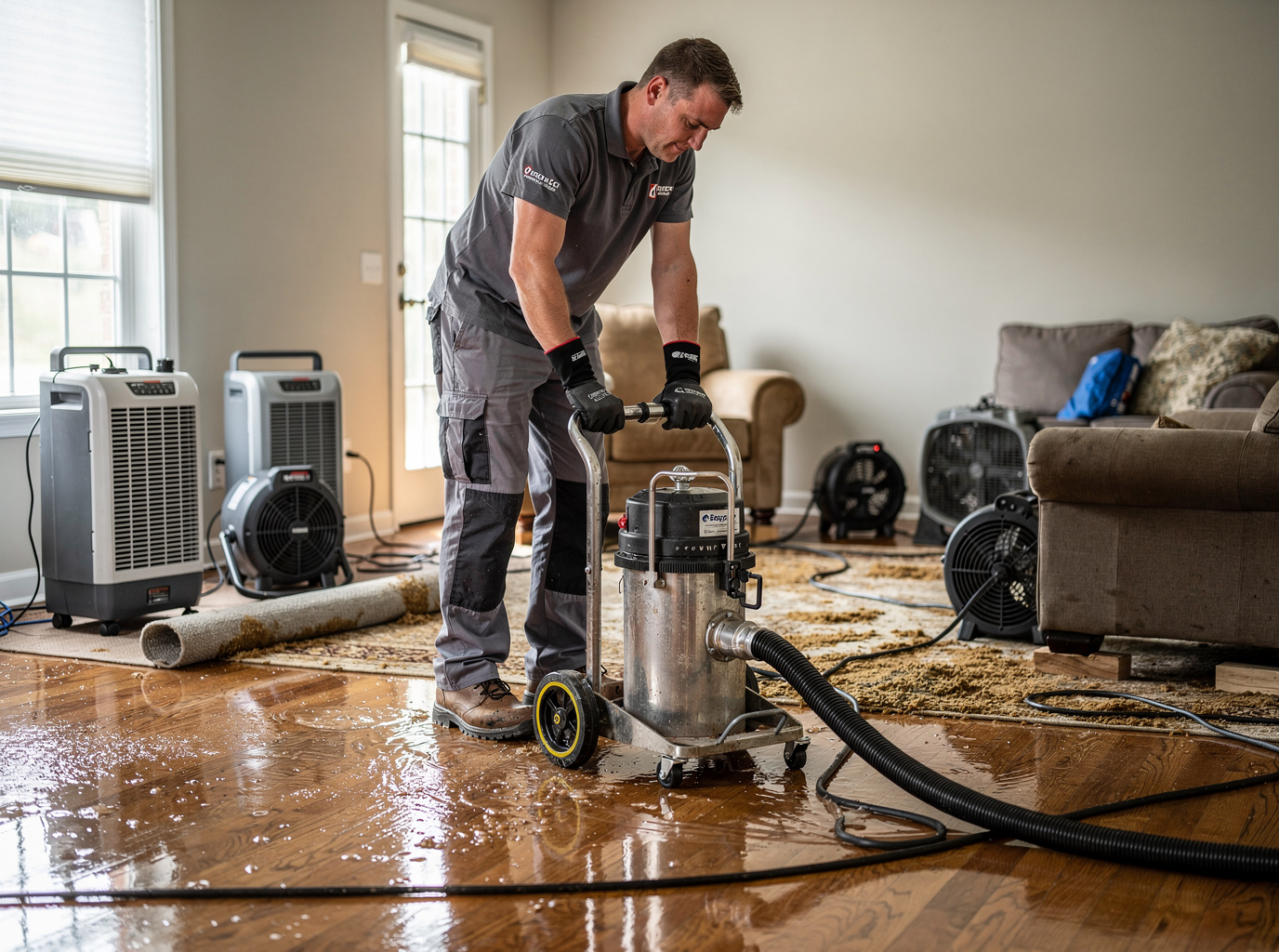
Greensboro's humid subtropical climate brings heavy summer thunderstorms and occasional winter freezes that stress older plumbing in neighborhoods like Fisher Park and Westerwood. Homes built before 1970 often have galvanized lines and crawl spaces that trap moisture after a leak, allowing hidden saturation in subfloors and insulation. Restoration crews must pull baseboards, use moisture meters on brick foundations common in Sunset Hills, and run commercial air movers for days to prevent secondary mold growth that spreads quickly in Guilford County's humidity.
Properties near the Greensboro Coliseum and along Wendover Avenue frequently see slab leaks or roof failures during peak summer rains. Technicians extract standing water with truck-mounted units, then place dehumidifiers calibrated for the local dew points. In Lindley Park bungalows, hardwood floors cup within hours if not addressed, requiring targeted sanding and refinishing rather than full replacement. Crews document every step for insurance adjusters while working around the city's older electrical systems that can short when wet.
After extraction, the focus shifts to drying wall cavities and checking for hidden moisture behind kitchen cabinets in Downtown Greensboro apartments. Technicians use infrared cameras to locate water that has wicked into lath-and-plaster walls typical of pre-war stock. Proper airflow patterns account for the tight layouts in these buildings so that treated air reaches every corner without pushing moisture into adjoining units.
Coordination with nearby Winston-Salem suppliers ensures replacement materials match the original trim profiles found in many Greensboro homes. Final clearance testing confirms moisture levels match pre-loss readings before any reconstruction begins, avoiding callbacks when humidity spikes again.
Technician insight
In Greensboro the thing that catches most people out with Water Damage Restoration is how fast mold sets in during our humid summers once water reaches the insulation behind plaster walls in pre-1960 homes; many wait until they smell it before calling, but by then the job has doubled because the moisture has already moved into the floor joists common in Fisher Park bungalows.
Crawl Space Leak In Lindley Park Bungalow
A homeowner noticed musty air after heavy July rain. Inspection found a cracked cast-iron drain line saturating the dirt floor and joists. Extraction and targeted drying prevented mold spread into the living area; the floor was restored without full replacement.
Water Damage Restoration Services We Offer
✓Emergency Water Extraction
Rapid removal of standing water from basements and first floors using truck-mounted pumps sized for Greensboro storm volumes.
✓Structural Drying and Dehumidification
Placement of industrial air movers and dehumidifiers to dry wall cavities and subfloors in older Fisher Park and Westerwood homes.
✓Carpet and Hardwood Restoration
Cleaning, drying, and refinishing of flooring materials damaged by leaks common in Lindley Park and Sunset Hills properties.
✓Mold Prevention After Water Damage
Application of antimicrobial treatments and moisture monitoring to stop mold growth accelerated by Guilford County's humid summers.
✓Crawl Space Water Removal
Pumping and drying of crawl spaces beneath older Greensboro homes where trapped moisture affects floor joists.
Water Damage Restoration Cost in Greensboro, NC
| Service | Typical Range | What Affects It |
|---|---|---|
| Initial Assessment And Extraction | $350–$850 | Depends on water volume and access in crawl spaces or multi-story homes. |
| Full Structural Drying | $800–$2,200 | Influenced by square footage, humidity levels, and number of days required. |
| Flooring Restoration | $1,200–$3,500 | Varies by material type and whether hardwood cupping or carpet padding replacement is needed. |
| Crawl Space Drying Package | $600–$1,400 | Common add-on for older homes in Fisher Park and Westerwood. |
Ranges are typical for Greensboro, NC and confirmed with an exact written quote before any work starts.
How it works
- 1
Arrival And Assessment
Technicians arrive within hours, map the affected areas with moisture meters, and identify the water source in the specific home.
- 2
Water Extraction
Standing water is removed using pumps and vacuums suited to the volume and location, protecting nearby finished surfaces.
- 3
Drying Setup
Air movers and dehumidifiers are positioned based on the home's layout and construction type to reach all wet materials.
- 4
Monitoring And Clearance
Daily moisture readings continue until levels return to normal, followed by final inspection before any rebuild work.
Pricing
Pricing varies by scope, duration, and materials affected; most jobs start with an on-site assessment.