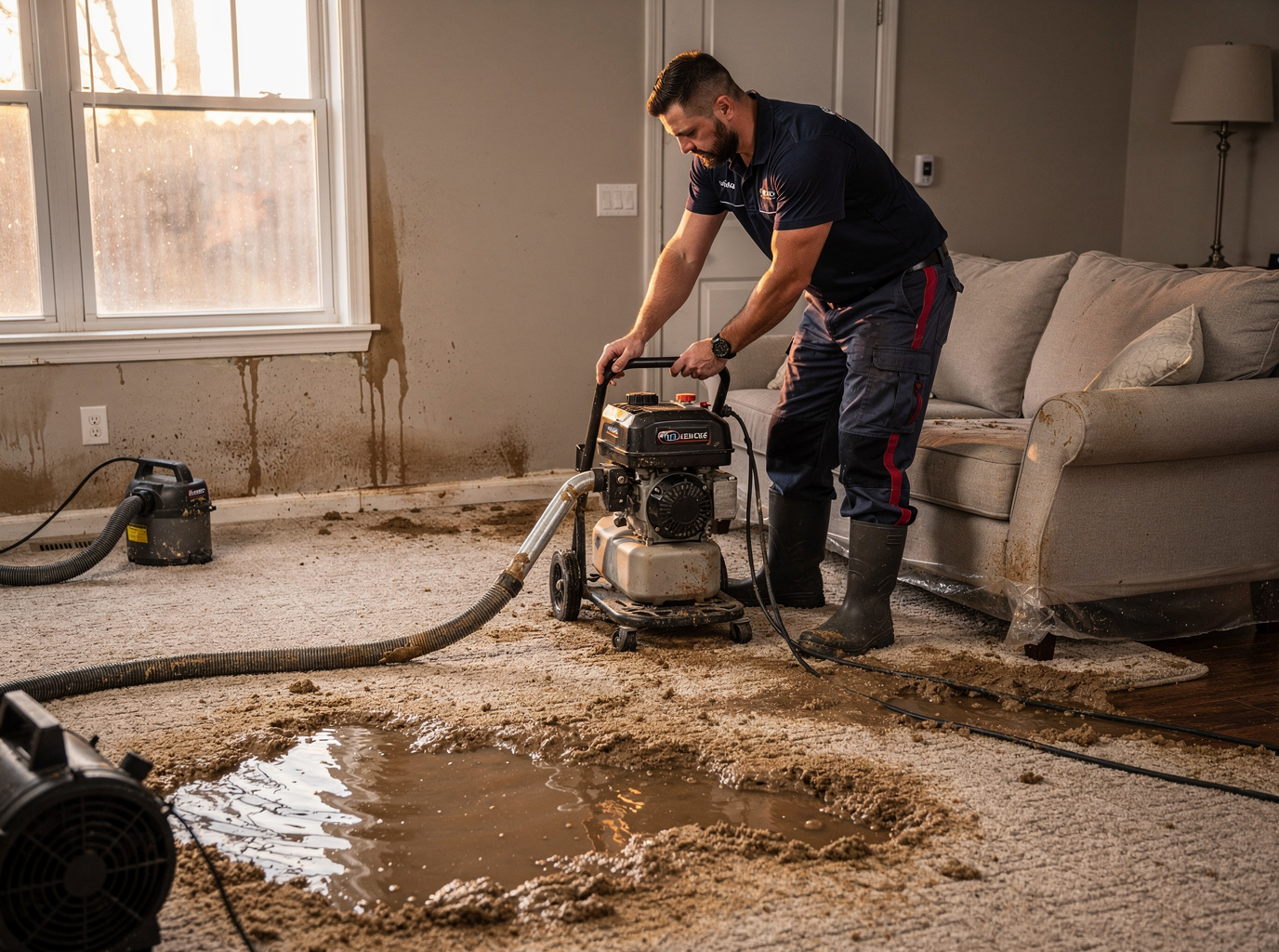
Greensboro's humid subtropical climate brings heavy summer rains and occasional winter freezes that crack older pipes in neighborhoods like Westerwood and Lindley Park. Homes built before 1970 often have plaster walls and hardwood floors that trap moisture deep in the structure, so surface drying alone leaves hidden pockets that later grow mold. Crews must pull baseboards, use moisture meters on subfloors, and run commercial dehumidifiers for days rather than hours to reach safe readings before any finish work begins.
Properties near the Greensboro Coliseum and the International Civil Rights Center & Museum sit on slightly lower terrain that funnels runoff during cloudbursts. When a water heater or washing machine fails in these areas, water can travel under shared walls into adjacent units, requiring coordinated drying across multiple addresses. Technicians document every affected room with photos and meter logs so insurance adjusters see exactly how far the water traveled through the slab or crawlspace.
Fisher Park and Sunset Hills contain many two-story brick homes with finished basements. After a roof leak or upstairs bath overflow, water follows joists and can pool behind built-in cabinetry. Cleanup includes removing wet insulation, treating joists with antimicrobial, and placing air movers in tight cavities so the wood dries evenly without warping. Work stops only when every reading on the meter shows the structure is within normal range for Guilford County humidity levels.
Technician insight
In Greensboro the thing that catches most people out with water damage cleanup is how quickly moisture travels through the plaster and lathe in pre-1960 homes around Fisher Park. A small upstairs leak can soak the entire wall cavity and reach the first-floor subfloor before anyone notices. If you only pull the carpet and run a box fan, the wood stays wet for weeks in our summer humidity and mold follows.
Lindley Park upstairs bath overflow
Water from a cracked supply line reached the dining room ceiling and traveled under the hardwood. Meters showed elevated moisture in the subfloor and base plates. Extraction and targeted drying equipment ran for four days until readings normalized, allowing the homeowner to schedule flooring repairs without hidden mold later.
Water Damage Cleanup Services We Offer
✓Emergency Water Extraction
Rapid removal of standing water from basements and first floors using truck-mounted pumps to stop further migration into walls and floors.
✓Structural Drying Services
Placement of industrial air movers and dehumidifiers to pull hidden moisture from plaster, hardwood, and subfloors in older Greensboro homes.
✓Carpet and Pad Removal
Cutting and disposing of saturated carpet and padding followed by cleaning or replacement recommendations based on water category and material type.
✓Mold Prevention Treatment
Application of EPA-registered antimicrobials to studs and joists after water events to reduce mold risk in humid Guilford County conditions.
✓Content Drying and Cleaning
Moving furniture and belongings to a controlled drying area, cleaning salvageable items, and documenting everything for insurance purposes.
Water Damage Cleanup Cost in Greensboro, NC
| Service | Typical Range | What Affects It |
|---|---|---|
| Category 1 water cleanup (clean source) | $800–$1,800 | Single room or small area; price rises with finished basement or multiple rooms |
| Category 2 water cleanup (gray water) | $1,200–$2,800 | Includes extraction, disposal, and antimicrobial steps |
| Full-home drying package | $2,500–$4,500 | Two-story homes in Fisher Park or Sunset Hills often need longer equipment time |
| Content drying and cleaning | $400–$900 | Depends on number of rooms and salvageable items |
Ranges are typical for Greensboro, NC and confirmed with an exact written quote before any work starts.
How it works
- 1
On-Site Assessment
Technicians arrive from the Wendover Ave location, locate the water source, measure moisture in walls and floors, and map the full extent of affected areas.
- 2
Water Removal
Standing water is extracted with pumps and wands, then wet materials are removed to prevent secondary damage in humid summer conditions.
- 3
Drying And Monitoring
Equipment runs continuously while daily meter checks track progress until readings return to normal levels for the season.
- 4
Final Clearance
Once dry, surfaces are treated and the home is cleared for repairs, with photos and logs provided for insurance.
Pricing
Pricing varies by water volume, affected square footage, and how many days drying equipment must remain on site.