2026-11-12 · Robert Ellis
Detecting Pipe Bursts During January Freezes in Guilford County
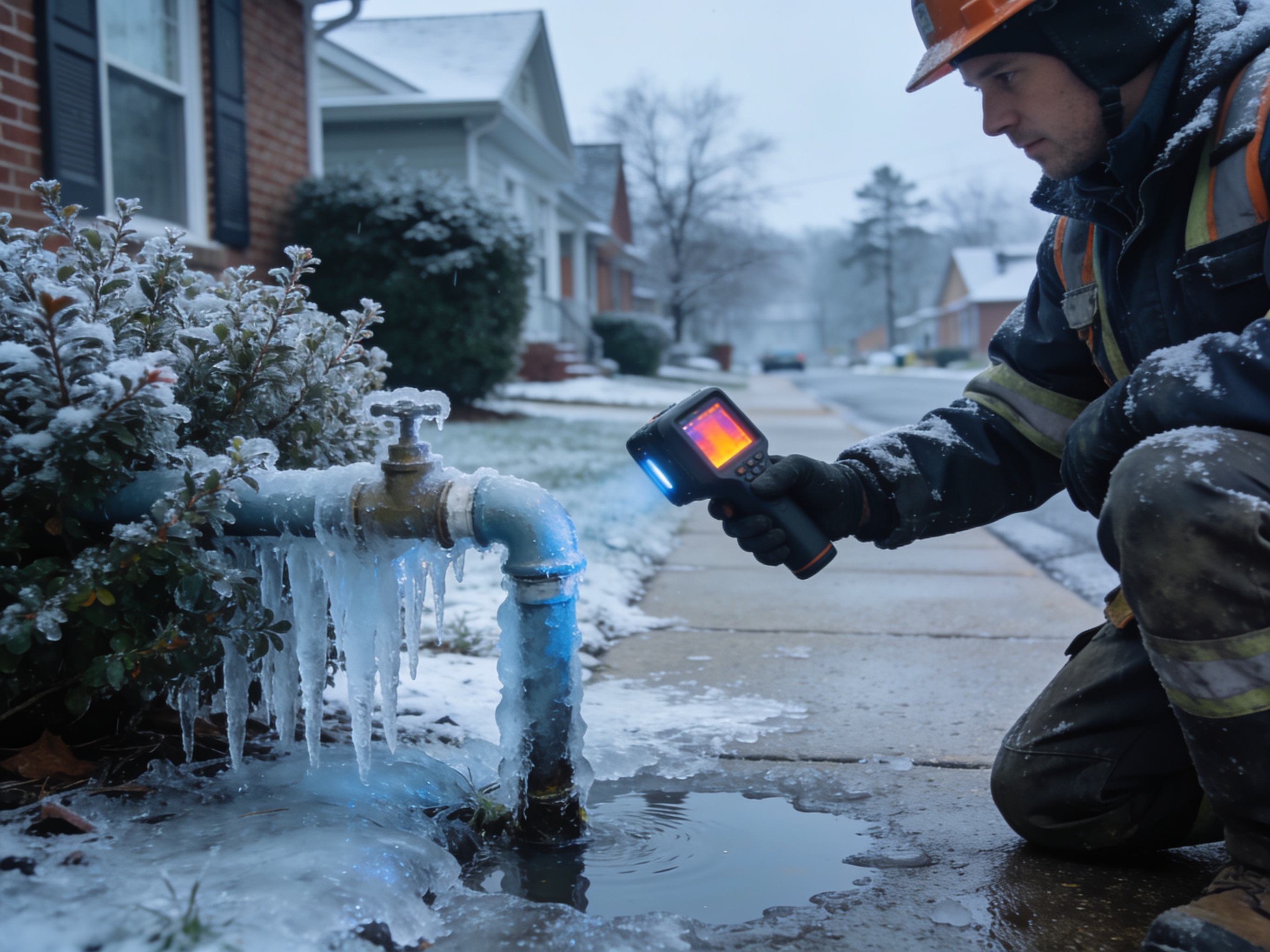
Pipe bursts during January freezes in Guilford County typically appear first through sudden water pressure drops combined with damp patches along exterior walls or in crawl spaces of homes built before 1980. These older properties in Downtown Greensboro, Fisher Park, and Westerwood often contain galvanized or copper lines that expand and crack when temperatures dip below freezing for several nights in a row. Mild winters here still bring enough cold snaps to stress joints near attics and exterior faucets, especially where insulation gaps exist.
Recognizing Early Indicators of Frozen Pipe Failures
Homeowners in Lindley Park and Sunset Hills frequently notice reduced flow from multiple fixtures at once when a main line has split. Listen for hissing sounds behind walls or ceilings, and watch for ceiling stains that darken within hours after a thaw. Ice expansion in 1/2-inch and 3/4-inch supply lines creates hairline cracks that only leak once water resumes flowing, so check utility rooms and laundry areas first thing each morning during cold spells. Discolored water or air sputtering from faucets also signals a break upstream, particularly in two-story homes where gravity pulls moisture downward into finished basements.
How Local Weather Patterns Contribute to Burst Risks
Guilford County's humid subtropical climate means January nights can drop to the low 20s even after mild days, creating repeated freeze-thaw cycles that fatigue pipe solder joints. Homes near the Greensboro Coliseum or International Civil Rights Center & Museum often sit on clay-heavy soils that shift slightly with moisture changes, adding stress to underground supply lines. Unlike harsher climates farther north, local builders rarely installed modern PEX in pre-1990 construction, leaving more properties vulnerable when winds from the west bring sudden cold fronts. Residents commuting to Winston-Salem see similar patterns in comparable housing stock there.
Inspecting Vulnerable Areas in Greensboro Homes
Start checks at hose bibs on the north side of houses in Westerwood, where shade keeps pipes colder longer. Move to water heaters and washing machine connections, then examine crawl space lines under Sunset Hills bungalows for frost on insulation. Use a flashlight to scan for bulging drywall tape along second-floor bathrooms, a common failure point when attic pipes freeze. Older multi-family buildings downtown may route lines through exterior walls, so inspect shared utility chases for moisture trails after each freeze event.
Immediate Actions to Limit Water Damage
Shut off the main valve at the street meter if pressure loss or wet spots appear, then open faucets on all floors to drain remaining water. Document visible damage with photos before any cleanup begins, noting exact locations in relation to known pipe routes. Contact a local team for Water Damage Restoration to extract standing water and dry affected framing before mold sets in. Review factors that influence repair scope in the related guide on what affects water damage restoration costs after local storms so you understand the drying timeline for your specific home layout.